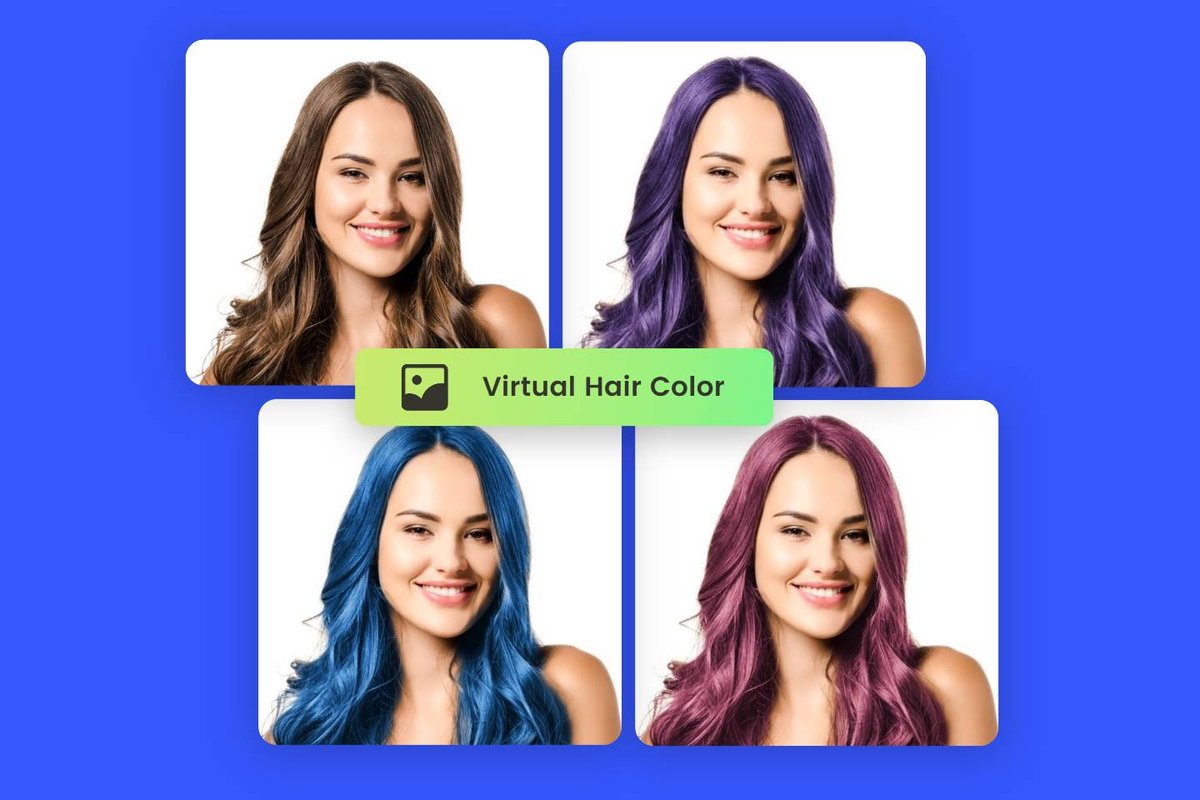
It's happened to almost everyone: You scroll through social media, stumble upon a stunning hairstyle, or perhaps you've spent hours with an app, virtually trying on a vibrant new shade. The digital reflection winks back, flawless and captivating, promising a whole new you. But when you walk into the salon with that screenshot, the path to translating virtual hair color to reality often feels less like a straight line and more like a winding, scenic detour. Despite 82% of salon clients using digital references for their hair, a significant 47% report dissatisfaction when their virtual vision meets the mirror. The dream fades when pixels meet practicalities.
Why the disconnect? Virtual try-on tools, while revolutionary, operate in a perfect digital bubble: ideal lighting, uniform texture, and predictable hair fall. Reality, however, introduces your unique hair's history, its natural growth patterns, environmental factors, and the human element of styling. This guide will arm you with the strategies, insights, and communication tools you need to bridge that gap, ensuring your virtual inspiration becomes a satisfying, real-world transformation.
At a Glance: Bridging the Virtual-to-Reality Hair Gap
- Manage Expectations: View virtual styles as inspiration, not blueprints. A collaborative mindset increases satisfaction to 91%.
- Know Your Hair: Understand your natural texture, color history, and face shape's role in how a style translates.
- Prepare Meticulously: Create a detailed virtual portfolio and assess your hair health honestly before the salon.
- Communicate Clearly: Use salon-friendly language and discuss lifestyle, maintenance, and realistic timelines with your stylist.
- Adapt for Your Type: Fine, thick, or curly hair each require specific techniques to achieve virtual looks.
- Understand Color Science: Screen colors differ from dye results; underlying pigments and previous treatments heavily influence outcomes.
- Invest in Skill & Tools: Learning basic styling and having the right tools are crucial for daily upkeep.
- Prioritize Safety: Always demand a strand test for color and perform an allergy patch test 48 hours prior.
The Virtual Dream vs. Reality's Mirror: Where Pixels Deceive
Virtual try-on technologies have transformed how we visualize new looks. Tools like L'Oréal Paris's Virtual Hair Color Try On, leveraging Augmented Reality (AR) and Artificial Intelligence (AI), can overlay over 200 hair colors onto your live video or uploaded photo with an average accuracy of 88% for color renderings. These systems fine-tune shades to your current hair, offering recommendations based on skin tone and eye color. It's a fantastic starting point, a playground for imagination.
However, the "digital ideal" often glosses over critical real-world variables. Virtual apps present hair with perfect volume, consistent sheen, and gravity-defying lifts that might require hours of styling or specific products in reality. Discrepancies commonly arise from:
- Texture & Volume: Virtual hair rarely shows frizz or the true density of a thick mane.
- Color Complexity: Screens simplify color, missing the nuanced interplay of highlights, lowlights, and your hair's underlying pigments.
- Maintenance Needs: An effortlessly chic virtual bob might demand daily flat-ironing.
- Face Angle & Asymmetry: Apps often present a perfectly symmetrical, front-facing view, ignoring the subtle (or not-so-subtle) asymmetries of your actual face, ear position, or neck length.
Recognizing these inherent differences is the first step towards a successful transformation.
Beyond the Screen: Setting Your Expectations for Success
The single most impactful strategy for client satisfaction? Expectation management. Clients who view AI-chosen haircuts as collaborative starting points rather than exact blueprints report satisfaction rates of 91%, a stark contrast to the 52% of those expecting pixel-perfect duplication. Think of your virtual image as an inspirational mood board, not an exact blueprint for your stylist to follow.
Understanding the "Why": The Critical Factors at Play
Before you even step into a salon, understanding the fundamental differences between your hair and the virtual ideal is paramount.
Your Unique Hair Texture: The Unsung Hero
Your natural hair texture is arguably the most critical factor influencing how a virtual style will translate. Fine hair, for example, inherently lacks the volume and body often depicted in virtual try-ons. Thick hair can easily overwhelm certain delicate styles, leading to a "helmet" effect rather than the airy look you envisioned. And curly hair? Its unique pattern dictates the overall shape and volume, with shrinkage a significant consideration. A virtual bob might look sleek and straight, but on your naturally wavy hair, it could mean constant heat styling to achieve a similar effect.
The True Colors of Your Hair: Screen vs. Salon
Translating virtual hair color is arguably the trickiest part. Screens display additive color (light-based), while hair uses subtractive color (pigment-based). What looks like a vibrant copper on your phone might be a muted auburn on your actual hair, heavily influenced by:
- Previous Color History: Up to three years of color treatments can impact how new dyes take.
- Underlying Pigments: Everyone has natural undertones (warm, cool, neutral) that interact with dye.
- Porosity: How open your hair's cuticle is affects dye absorption and retention.
- Gray Percentage: Gray hair lacks pigment and responds differently to color.
- Water Mineral Content: Minerals in your shower water can build up and affect color.
- Lighting: The color looks different under fluorescent, natural, or incandescent light.
Understanding these variables is crucial for realistic color expectations. Going significantly lighter, for instance, nearly always requires bleaching, which impacts hair health. Fashion colors need pre-lightening for vibrancy. This is where the magic of a skilled colorist truly comes into play. If you're looking to explore more color options, you might want to Explore our hair color generator to see various shades on different models.
Face Shape & Features: More Than Just the Front View
Virtual apps often present a flattering, head-on perspective. In reality, most faces are asymmetrical. Your profile, ear position, neck length, and jawline definition all profoundly affect how a hairstyle frames your face. A virtual pixie cut might seem perfect from the front, but what about your prominent ears or a shorter neck? A good stylist considers these elements to adapt the style so it harmonizes with your unique features, not just a generic face shape.
Your Pre-Salon Playbook: Setting the Stage for Transformation
Success isn't accidental; it's planned. A thoughtful approach before your salon visit significantly boosts your chances of a satisfying outcome.
Crafting Your AI Hair Style Portfolio
Don't just bring one screenshot. Create a comprehensive portfolio from your virtual try-on sessions:
- Primary Choice: Include images from at least three angles (front, side, back if possible).
- Backup Options: Have 2-3 alternatives, especially if your primary choice is a dramatic change.
- Color Variations: Show different shades of your chosen color, or different color options if you're undecided.
- Length Progression: If you're going for a significant cut, show images of similar styles at slightly longer or shorter lengths.
- Styling Variations: Include photos of the same cut styled differently (e.g., sleek, wavy, textured) to discuss versatility.
- Current Hair Issues: If the virtual style addresses a specific concern (e.g., thinning, frizz), make a note of it.
This portfolio gives your stylist a rich understanding of your vision and preferences, allowing for a more nuanced conversation about what's achievable.
An Honest Hair Health Check-Up
Your hair's current condition is a non-negotiable factor. Conduct an honest self-assessment:
- Strand Test: Gently stretch a wet strand. Healthy hair stretches and bounces back; damaged hair breaks or feels gummy.
- Damage Level: On a scale of 1-10 (1 being virgin, 10 being severely damaged), where do you stand?
- Processing History: What chemical services (color, perms, relaxers) have you had in the last six months to three years?
- Daily Styling Routine: How much heat styling do you do? What products do you use?
- Realistic Maintenance Time: How much time are you truly willing to dedicate daily to styling?
- Lifestyle Factors: Do you swim regularly? Are you often in the sun? These impact color and hair health.
Providing this information upfront allows your stylist to make informed decisions and prevent further damage, especially if you're considering a significant color change or chemical treatment.
Finding Your Hair Architect: Choosing the Right Stylist
The right stylist is your partner in this transformation. Look for someone who:
- Welcomes Digital References: They see your portfolio as a conversation starter, not a directive.
- Asks Detailed Questions: They delve into your lifestyle, hair history, and daily routine.
- Explains Adaptation Strategies: They can articulate how they'll modify the virtual look for your hair type and features.
- Offers Honest Feasibility Assessments: They'll tell you what's realistic and what's not, and why.
- Suggests Realistic Modifications: They'll propose alternatives that achieve a similar aesthetic.
- Provides Maintenance Education: They'll teach you how to care for and style your new look at home.
A consultation is crucial. Don't be afraid to interview a few stylists to find the perfect match.
Bridging the Gap: Mastering Salon Communication
Effective communication is key to translating your virtual vision. During your consultation:
- Present Your Virtual Portfolio Immediately: "I saw this look virtually and I love it. Here are some angles and variations."
- Explain Why It Appeals: "I love the volume at the crown and how it frames the face," or "I'm drawn to this warm blonde because it seems to complement my skin."
- Discuss Your Lifestyle Honestly: "I work out daily and need something low-maintenance," or "I'm willing to spend 30 minutes styling each morning."
- Ask About Adaptation: "Given my hair type, how would you adapt this look to work for me?"
- Request a Process Explanation: "Can you walk me through the steps for achieving this, and what challenges we might face?"
- Clarify Maintenance Needs: "What daily styling will this require, and what's the professional upkeep schedule?"
Speak Their Language: Translating Virtual Lingo
Sometimes, the language of virtual apps doesn't directly translate to salon speak. Help your stylist by translating:
- "AI filter smooth" often means "This will need significant flat ironing or a professional blow-dry."
- "Effortless waves" could mean "I'll need to learn how to use a curling wand or diffuser."
- "Instant volume boost" might translate to "My fine hair will need root lifting products and strategic layering."
Be open to your stylist's interpretation and recommendations, as they have the real-world expertise.
The Phased Approach: Big Changes, Smart Steps
For significant transformations (e.g., going from dark to platinum, or very long to very short), a phased approach often yields the best results and maintains hair health. Establish realistic milestones:
- Phase 1 (Month 1): Focus on hair health treatments and an initial cut to remove damaged ends or begin shaping.
- Phase 2 (Months 2-3): Gradually transition color, perhaps with highlights or balayage, or refine the cut.
- Phase 3 (Ongoing): Achieve the final look and establish a maintenance routine.
This approach prevents overloading your hair and allows you to adjust to changes gradually.
Tailoring the Look: Adaptations for Every Hair Type
No two heads of hair are alike. Here's how stylists adapt virtual looks for different hair types:
Fine Hair: The Art of Volume and Depth
- Strategic Layers: Shorter, internal layers can create the illusion of fullness without sacrificing length.
- Volumizing Techniques: Root lift products, backcombing, and proper blow-drying techniques are essential.
- Adjust Length: Shorter styles (pixies, bobs) often appear fuller than long, fine hair.
- Incorporate Texture: Soft waves or curls can add body.
- Color Strategically: Highlights and lowlights add dimension, making hair appear thicker.
- Product Must-Haves: Volumizing mousse, texture spray, dry shampoo, and light-hold hairspray.
Thick Hair: Managing Mass with Grace
- Internal Layering: Reduces bulk without taking away external length, creating movement.
- Strategic Thinning: Used sparingly, thinning shears can remove weight and help hair lay better.
- Embrace Natural Volume: Work with, not against, your hair's inherent fullness.
- Account for Extended Processing: Thick hair often needs more time for color to penetrate evenly.
- Heavy-Duty Products: Smoothing serums, anti-frizz creams, and strong-hold products can help manage thick hair.
Curly & Textured Hair: Embracing the Bounce Factor
- Consider Shrinkage: Curly hair can appear 30-50% shorter when dry than when wet. Your stylist must cut with this in mind.
- Adapt Layers for Curl Pattern: Layers must be cut to enhance and work with the natural flow of curls, not against them.
- Plan for Volume Expansion: Curly hair naturally has more volume; plan styles that accommodate this.
- Account for Weather Sensitivity: Humidity is a curly hair's nemesis. Discuss anti-frizz strategies.
- Build in Flexibility: Curly hair can vary day-to-day; choose styles that look good with different curl definitions.
- Product Must-Haves: Leave-in conditioners, curl creams, gels, and diffusers.
The Unspoken Truth: Living with Your New Look
A stunning haircut or color isn't a one-and-done deal. It requires ongoing commitment.
Decoding the Daily Maintenance Commitment
The "effortless" looks of virtual apps often hide a significant time investment.
- Pixie Cuts: Can range from 5-10 minutes (wash-and-go with product) to 15-20 minutes (blow-dry and style).
- Bobs & Lobs: Typically 15-25 minutes for blow-drying and light styling.
- Intricate Styles (Long Layers, Elaborate Curls): Can easily demand 30+ minutes, especially if you're aiming for a polished finish.
Factor this into your morning routine before committing to a look.
The Real Cost: Products, Tools & Professional Upkeep
Your hair investment extends beyond the salon chair.
- Product Investment:
- Cleansing & Conditioning: $25-$50 every 1-2 months for quality shampoo and conditioner.
- Styling Products: $15-$40 per product (mousse, gel, serum, heat protectant, texture spray), replenished as needed.
- One-Time Tool Purchases:
- Quality Blow Dryer: $100-$300
- Flat Iron/Curling Wand: $50-$200
- Specialty Brushes/Diffusers: $20-$50
- Professional Maintenance Schedule:
- Precision Cuts: Every 4-6 weeks ($30-$80, depending on salon and location).
- Color Touch-Ups/Gloss: Every 4-8 weeks ($50-$150+ for root touch-ups, toning).
- Deep Conditioning Treatments: Monthly or quarterly ($20-$50).
These costs are essential for preserving your color vibrancy, hair health, and style integrity.
Cracking the Code: The Nuances of Hair Color Translation
Virtual color try-ons are brilliant for inspiration, but they simplify the complex science of hair color.
Additive vs. Subtractive: The Science Behind the Shade
- Additive Color (Screens): Created by mixing light (Red, Green, Blue). More light adds up to white.
- Subtractive Color (Hair Dye): Created by mixing pigments. More pigments subtract light, resulting in darker colors.
This fundamental difference means a shade appearing bright and pure on your screen will interact with your hair's existing pigment to create a new, often nuanced, color.
Underlying Pigments & Porosity: Why Your Hair is Unique
Every strand of hair has underlying pigments (melanin) that become visible as natural color lightens. For example, dark hair naturally has red and orange undertones. When you bleach, these tones appear before you reach yellow or pale blonde. A skilled colorist works with these undertones, neutralizing or enhancing them to achieve your desired shade. Porosity (how open your hair cuticle is) also dictates how quickly and evenly your hair absorbs and holds color. Damaged or highly porous hair can grab color unevenly or lose it faster.
Safety First: Strand and Patch Tests You Can't Skip
Before any significant color service, two tests are non-negotiable:
- Strand Test: A small, inconspicuous section of your hair is colored to see how it will react to the dye, reveal the exact resulting shade, and determine processing time. This is your stylist's crystal ball.
- Allergy Patch Test: A tiny amount of the color product is applied to your skin (e.g., behind the ear or inner elbow) 48 hours before the service. This checks for allergic reactions, which can be severe. Never skip this.
From Salon Chair to Home Styling Pro: Developing Your Skills
The perfect cut and color are only half the battle. Learning to style your hair at home is crucial for maintaining your look.
Your 30-Day Skill-Building Roadmap
Think of it as a styling bootcamp:
- Weeks 1-2: Master Basic Blow-Drying: Learn proper sectioning, nozzle direction, and brush techniques for smoothness or volume.
- Weeks 3-4: Learn Specific Style Requirements: Practice using your flat iron, curling wand, or diffuser for your new look.
- Weeks 5-6: Practice Speed and Efficiency: Aim to reduce your styling time without compromising quality.
- Weeks 7-8: Perfect Finishing Touches: Learn to use styling products for hold, shine, and frizz control.
- Ongoing: Continuously refine your techniques and experiment with variations.
Investing in the Right Tools and Product Savvy
- Appropriate Tools: Don't skimp on quality. A good blow dryer with adjustable heat/speed is a must. A flat iron with ceramic or tourmaline plates protects hair. A diffuser is essential for enhancing natural curls.
- Product Application:
- Minimal Amounts: Start small; you can always add more.
- Emulsify: Rub products between your palms to activate them before applying.
- Section Strategically: Work in small sections for even distribution.
- Layer Correctly: Generally, apply lighter products (serums) before heavier ones (gels, creams), and wet products before dry ones (texture spray).
- Focus Placement: Apply volumizing products at the roots, smoothing products mid-shaft to ends.
Your 30-Day Transformation Timeline: A Step-by-Step Guide
Here’s a practical roadmap to turn your virtual vision into a stunning reality:
Week 1: Research & Reality Check
- Virtual Try-On Sessions: Spend time with apps, exploring different styles and colors.
- Build Your Digital Portfolio: Collect diverse images, angles, and variations of your chosen styles.
- Hair Health Assessment: Perform a strand test, document your hair history, and assess its current condition.
- Lifestyle Reflection: Be honest about your daily styling time, budget, and maintenance commitment.
- Research Stylists: Look for professionals specializing in the styles/colors you're considering.
Week 2: Consultation & Planning - Book Consultations: Schedule meetings with 2-3 potential stylists. Bring your portfolio.
- Open Communication: Discuss your virtual vision, hair health, lifestyle, and ask detailed questions about adaptation and process.
- Get Feasibility Checks: Listen to honest assessments and proposed modifications.
- Plan Your Transformation Timeline: With your chosen stylist, map out a phased approach for significant changes.
- Schedule Appointments: Book your first cut and/or color appointment, ensuring a patch test is done 48 hours prior if coloring.
Week 3: The First Transformation & Basic Styling - Attend Your Appointment: Enjoy the process!
- Ask for Styling Tips: Have your stylist walk you through the basics of styling your new look.
- Practice Daily: Start mastering fundamental styling techniques (blow-drying, product application).
- Invest in Tools & Products: Purchase the recommended items to maintain your style.
Week 4: Assess, Adjust & Maintain - Self-Assessment: How do you feel about your new hair? Does it align with your vision and lifestyle?
- Address Concerns: If you have questions or minor adjustments, contact your stylist.
- Perfect Your Routine: Fine-tune your daily styling process, experimenting with product amounts and techniques.
- Plan Maintenance: Schedule your next cut or color touch-up based on your stylist's recommendations.
Your Next Step: From Pixels to Perfect Hair
The future of hairstyling lies in the harmonious balance between digital innovation and human expertise. Virtual try-on tools offer unparalleled inspiration, allowing you to dream bigger and bolder. But the journey from that screen to your head requires collaboration, honest communication, and a deep understanding of your unique hair and lifestyle.
By managing your expectations, meticulously preparing, choosing the right stylist, and committing to ongoing care, you can confidently translate that captivating virtual image into a real-world look you truly love. It's not about achieving a pixel-perfect replica, but about creating a bespoke style that flatters your features, suits your life, and makes you feel authentically you.